Booking choice: The 8-tastings day with lunch. Check dates Tour details
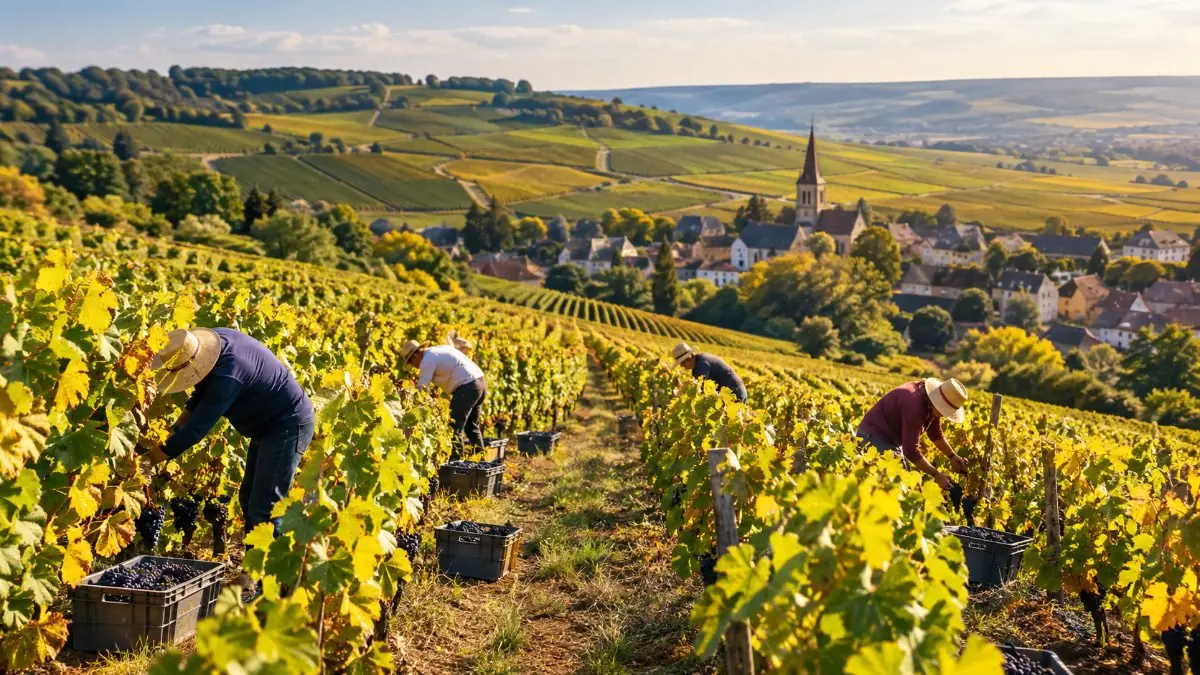
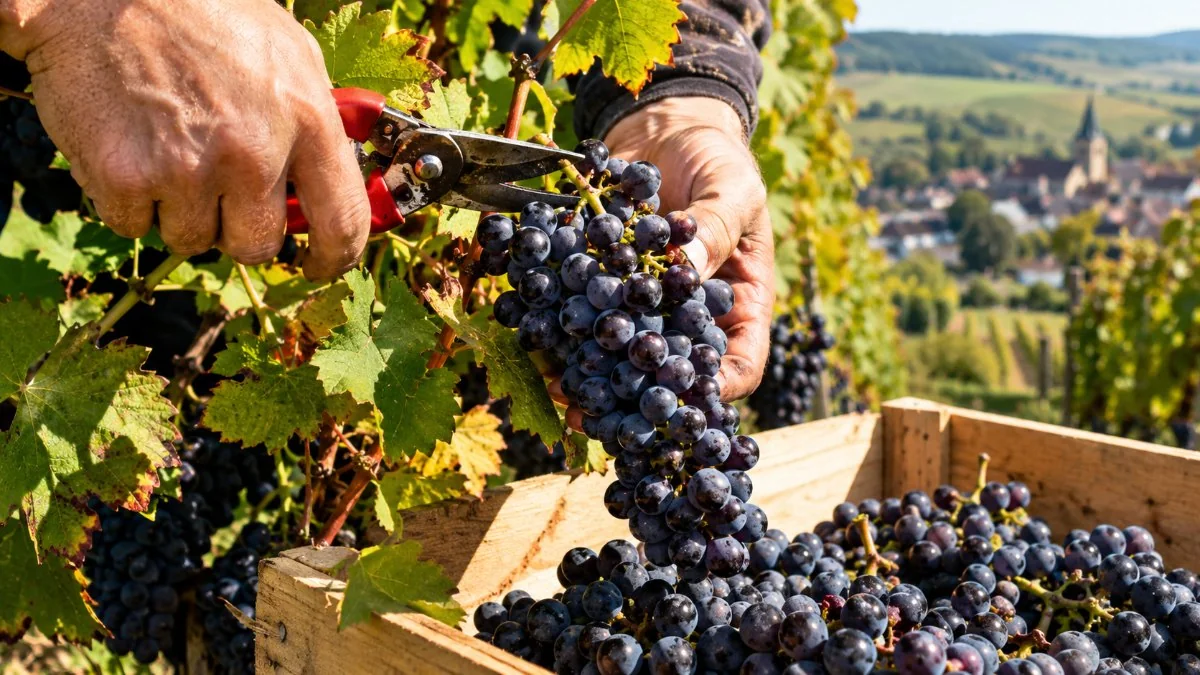
The vendanges (the grape harvest) usually belong to September. Not in 2026. The first Champagne grapes were cut around 6 August, the official opening dates came out on 12 August, and most villages were picking by 17 August. By the time most autumn visitors arrive, the harvest is long over.
This post sets out what the Comité Champagne and the French press reported, what the smaller 2026 crop means, and what you can still see on a day trip from Paris in October and November.
The quick answer
The 2026 harvest is the earliest ever recorded in Champagne: first grapes around 6 August, picking across the region from 17 August, about two weeks ahead of 2025. The Comité Champagne capped the sellable yield at 8,800 kg per hectare, its fourth cut in a row, and frost and drought made the real crop smaller still. Picking is finished, so an autumn tour shows you golden vines, quiet presses and young wine fermenting in vats.
When did the 2026 Champagne harvest start?
Around 6 August 2026 in the earliest plots, with the official opening dates published on 12 August and picking widespread from 17 August.
Each year the Comité Champagne sets the first picking day per village and per grape variety. In 2026 those dates were published on 12 August, which co-president David Chatillon called the earliest publication ever observed, according to L'Info Durable. A few communes in the Aube, which often get permission to start ahead of the rest, were already picking the week before.
The Comité's own mid-September review, published from Épernay on 15 September, gives the full picture: first vineyards around 6 August, harvest general from 17 August, about 14 days earlier than 2025. Twenty years ago an August start would have been news. Now, a grower on the board of the growers' union told the press, it has happened three times in five years.
| Date (2026) | What happened | Source |
|---|---|---|
| 22 July | Comité Champagne sets the yield at 8,800 kg/ha | Comité Champagne, via the press |
| About 6 August | First grapes cut, in the earliest plots | Comité Champagne |
| 12 August | Opening dates published for every village | Comité Champagne |
| 17 August | Picking widespread across the appellation | Comité Champagne |
| 15 September | Comité publishes its harvest review | Comité Champagne |
Why was the 2026 harvest so early, and how big is the crop?
Heat. Five summer heatwaves and a dry season pushed ripening forward, while spring frost and drought shrank the crop to about half of 2025.
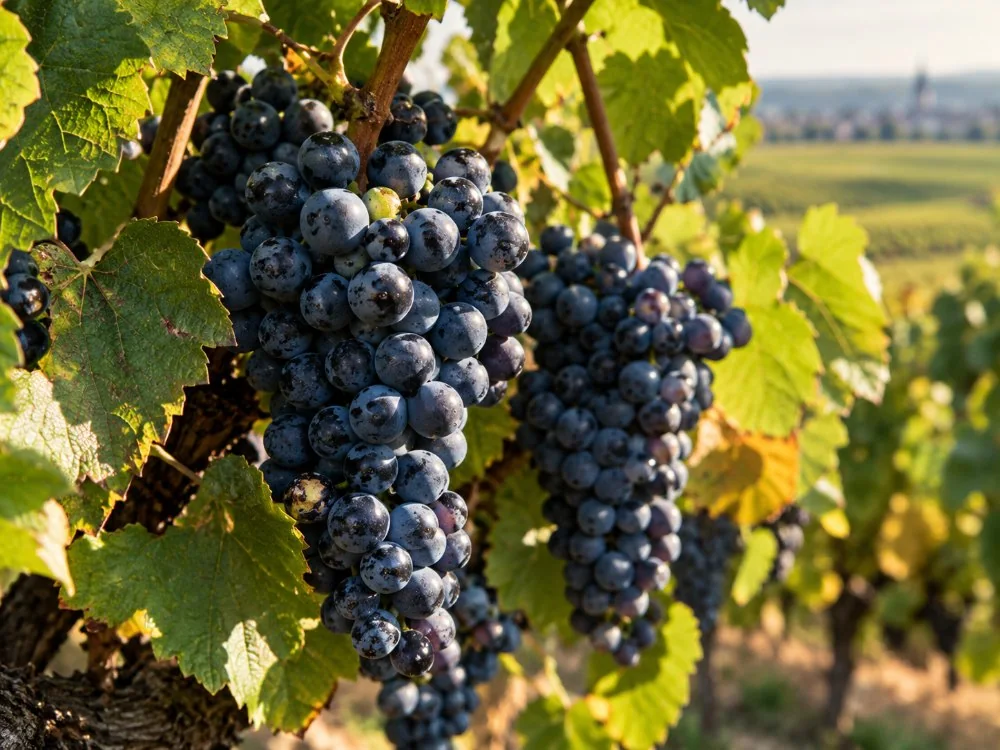
The year started badly. Spring frost destroyed nearly 40% of the buds, one of the worst losses since 2003, according to the same report. Flowering came very early, then the Comité counted five summer heatwaves. With little water, the bunches stayed small and light.
On 1 September Agreste, the statistics service of the French agriculture ministry, put Champagne's production at about 1.3 million hectolitres: 48% below 2025, as Vinetur reported. The quality news is far better. The Comité describes healthy, ripe grapes with fresh, concentrated juice, and compares the balance to the great years 1921, 1947 and 1959. It also says it is too early for a final verdict. Fair enough.
What yield did Champagne set for 2026?
8,800 kg of grapes per hectare, decided on 22 July 2026. It is the fourth cut in a row and the lowest since the Covid year 2020.
Champagne controls supply through the rendement commercialisable, the weight of grapes per hectare that can be sold as Champagne. Growers and houses agree it together inside the Comité Champagne. For 2026 they chose 8,800 kg/ha, which the Comité equates to about 250 million bottles, according to The Drinks Business.
The reasons given: an uncertain economy, stocks to bring down, and a vineyard already weakened by frost and heat (L'Info Durable). Sales are holding up. Shipments in the first half of 2026 were 107.1 million bottles, up 1.2%. A ministry order also lets producers buy up to 15% more grapes, musts or wines this year, against the usual 5%.
One twist. Vinetur reported that agronomic estimates fell to 7,000 to 8,000 kg/ha. Many growers will not reach the cap at all, because the grapes were simply not there.
| Harvest | Sellable yield (kg/ha) | Change |
|---|---|---|
| 2022 | 12,000 | |
| 2023 | 11,400 | Down 600 |
| 2024 | 10,000 | Down 1,400 |
| 2025 | 9,000 | Down 1,000 |
| 2026 | 8,800 | Down 200, about 250 million bottles |
What do you see on a Champagne tour after the harvest?
Empty presses, vines turning gold, and the new wine fermenting in vats and casks. The bottles in the chalk cellars are from earlier years.
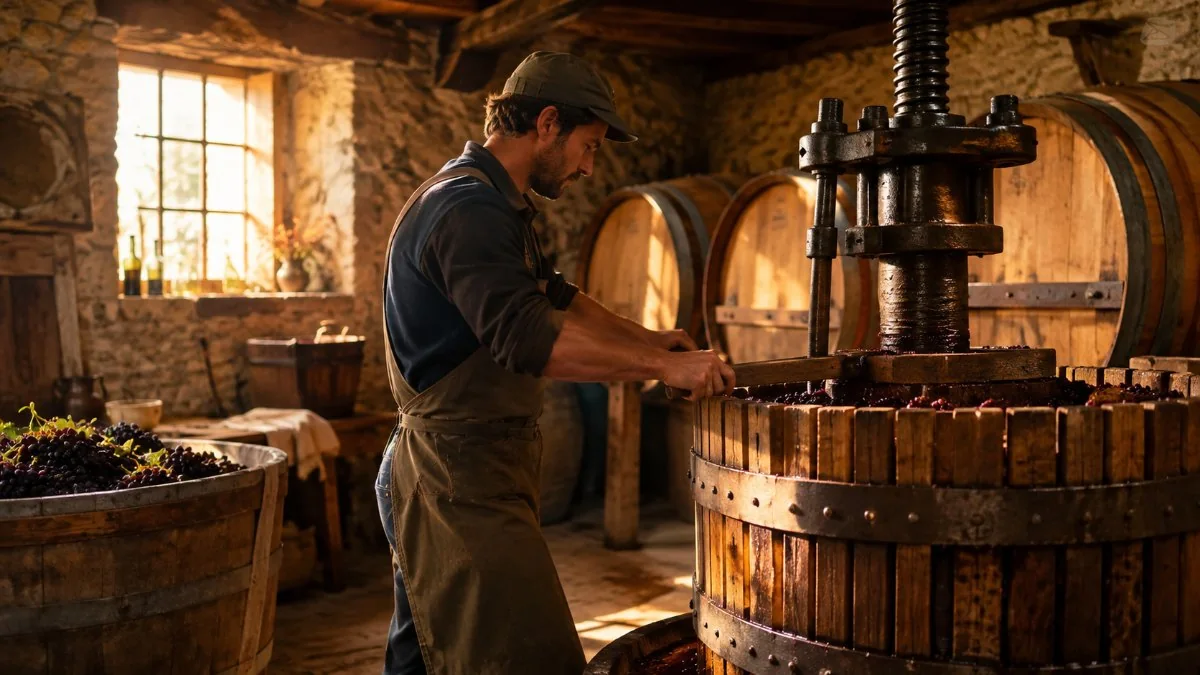
Pressing happens right after picking, in approved press houses close to the vines. The Comité Champagne says a standard load, the marc, is 4,000 kg of whole grapes, pressed separately by variety and by plot. From each marc, only 2,050 litres of first juice (the cuvée) and 500 litres of second juice (the taille) can be used, per the Comité's factsheet.
By October the juice has settled and turned into still wine in the first fermentation. A second, optional step, malolactic fermentation, softens the acidity. Over the winter the cellar master tastes and blends, and bottling with yeast and sugar for the second fermentation can start from 1 January following the harvest. A family grower in October will happily show you the tanks, let you taste a still base wine if one is ready, and talk about the frost. Ask. The sommelier-led cellars tour goes one step further and stops at Pressoria in Aÿ, a museum built around pressing.

A famous house in the morning, then a family estate or co-op, where the autumn cellar work is close enough to touch. At least eight tastings and lunch.
Explore the 8-tastings day with lunch Tour detailsIs autumn 2026 a good time for a Champagne day trip?
Yes, for the colours and quieter houses. Do not book October for harvest action: in 2026 the picking ended in September.
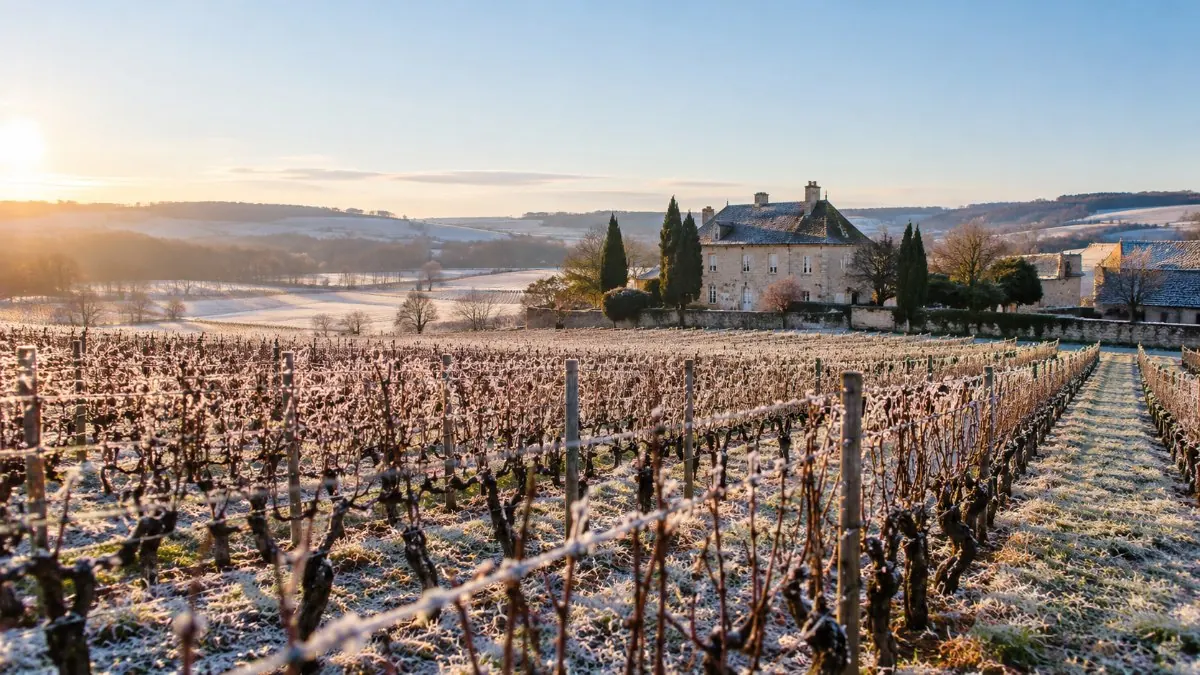
October is when the vines turn yellow and red on the slopes around Hautvillers and Aÿ, and the houses have fewer groups than in summer. The trade-off arrives with November. Some big houses cut their opening days: Veuve Clicquot is closed Mondays and Tuesdays from 30 October, and Mumm opens Thursday to Monday from 1 November. Our post on winter opening days at the houses has the full table.
On a tour the house names are usually "subject to availability" anyway, and the operator plans around closed days. If you want harvest crews in the vines next year, watch for the opening dates in August, not September. Our month-by-month guide covers the rest of the year.
Small group, a big house plus growers, lunch included, and nobody has to drive after the tastings.
Check dates for the 8-tastings day with lunchWhen will the 2026 vintage be in your glass?
Not before spring 2028 for a non-vintage blend, and not before 2030 for a vintage Champagne, if a house declares one.
The rules set minimum ageing from bottling. Non-vintage Champagne needs at least 15 months, vintage at least 36 months, and bottling cannot start before 1 January 2027. In practice the Comité says non-vintage ages two to three years and vintage four to ten.
Most 2026 wine will disappear into blends, with some kept back as reserve wine for later years. Whether a house releases a 2026 vintage is its own decision. With the quality the Comité describes and the small volume, expect a few to try. Expect them to be expensive.
| Style | Minimum ageing | Earliest on sale |
|---|---|---|
| Non-vintage (Brut) | 15 months after bottling | About spring 2028 |
| Vintage (2026 on the label) | 36 months after bottling | About early 2030 |
| Typical non-vintage in practice | 2 to 3 years | 2029 to 2030 |
| Typical vintage in practice | 4 to 10 years | 2031 onwards |
Frequently asked questions
When was the 2026 Champagne harvest?
It started around 6 August 2026 in the earliest plots, the official opening dates came out on 12 August, and picking was widespread from 17 August. It is the earliest harvest on record in Champagne.
Can I see the Champagne harvest in October 2026?
No. In 2026 the picking finished in September. In October you see autumn colours in the vines and new wine fermenting in the cellars.
What is the Champagne yield for 2026?
The Comité Champagne set the sellable yield at 8,800 kg per hectare on 22 July 2026, about 250 million bottles. Frost and drought mean many growers will harvest less than that.
Is the 2026 Champagne vintage going to be good?
The Comité Champagne calls the grapes healthy and ripe and compares the balance to 1921, 1947 and 1959, while saying it is too early for a final verdict. The crop is small.
Ready to book
Choose your tour
Free cancellation up to 24 hours before on every option. Check live availability for your date.
Champagne Day Trip with 8 Tastings & Lunch
- Guided visit and tasting at a major Champagne house
- Second visit at a family estate or a cooperative
- Lunch paired with at least 3 Champagnes

Champagne Cellars Tour with a Sommelier
Hautvillers, Aÿ and Épernay with a sommelier-guide, max 7
Small-Group Champagne Day with Six Tastings
- Three glasses at a family-run winery
- Three glasses at Nicolas Feuillatte
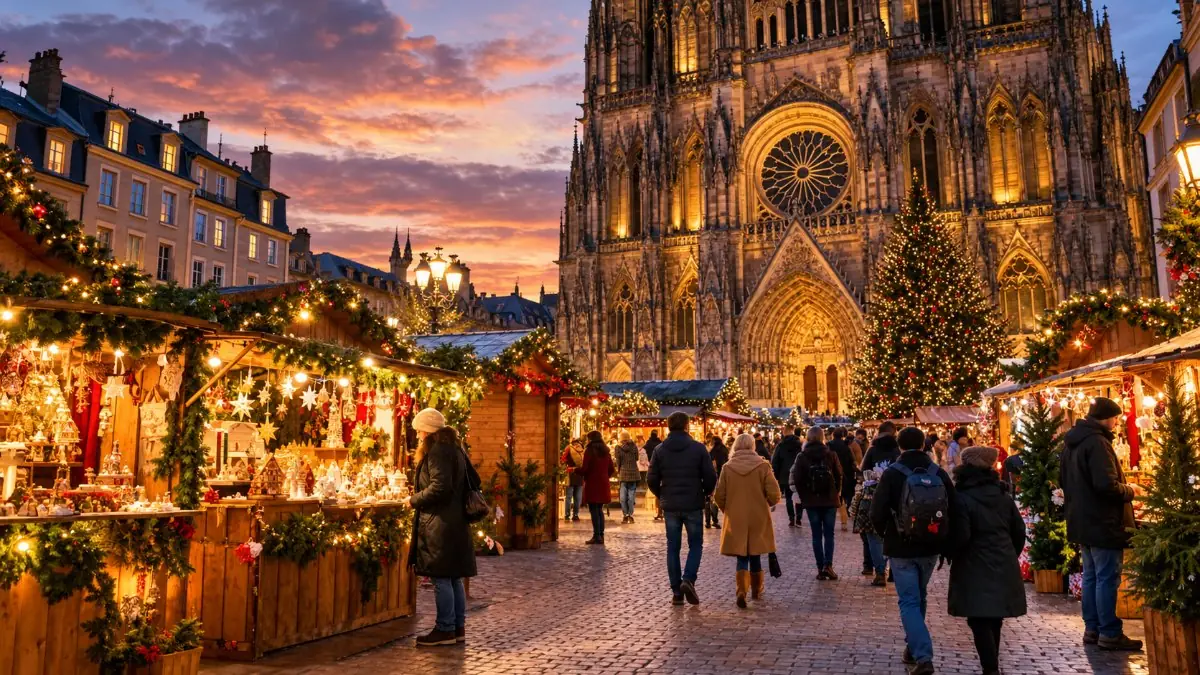
- Reims Cathedral and the abbey at Hautvillers